
-
Top Digimarc Alternatives: Ultimate Guide in 2026

Compare leading Digimarc alternatives for watermarking, fingerprinting, provenance, and enforcement in 2026.
-
Top Audible Magic alternatives in 2026

Compare four Audible Magic alternatives for detection and enforcement—InCyan, ACRCloud, Pex (Vobile), and AudD—to match needs for protection or ID.
-
AI Content Fingerprinting Platform for Images Video Audio and Text in 2026

Multimodal AI fingerprinting for images, video, audio, and text that finds altered copies and supports verifiable enforcement.
-
Enterprise Software to Detect Unauthorized Use of Stock Photos in 2026

Compare enterprise tools for finding, proving, and removing unauthorized stock-photo uses across web, marketplaces, and social.
-
Vobile vs Irdeto vs InCyan for Video Piracy Detection in 2026

Choose enforcement by scale, live-event speed, or modular proof—match detection method, response time, and evidence before you sign.
-
Software That Finds Cropped or Edited Copies of My Images in 2026

Only a layered stack—AI similarity, invisible watermarks, blockchain timestamps, and automated takedowns—can reliably find and remove cropped or edited image copies.
-
Enterprise Platform to Find Pirated Video and Image Content in 2026

Anti-piracy must link ownership proof, resilient matching, tamper-evident evidence, and automated takedowns to protect revenue.
-
Best Copyright Infringement Monitoring Platform for Publishers in 2026

Mixed-format publishers need a single stack that proves ownership, finds copies, and removes stolen content fast.
-
Best ISP Blocking Monitoring Software in 2026

Compare six tools for verifying ISP blocking compliance, focusing on evidence quality, coverage, and alerting for legal and ops teams.
-
How Can a Broadcaster Track Reposted Clips on Social Media
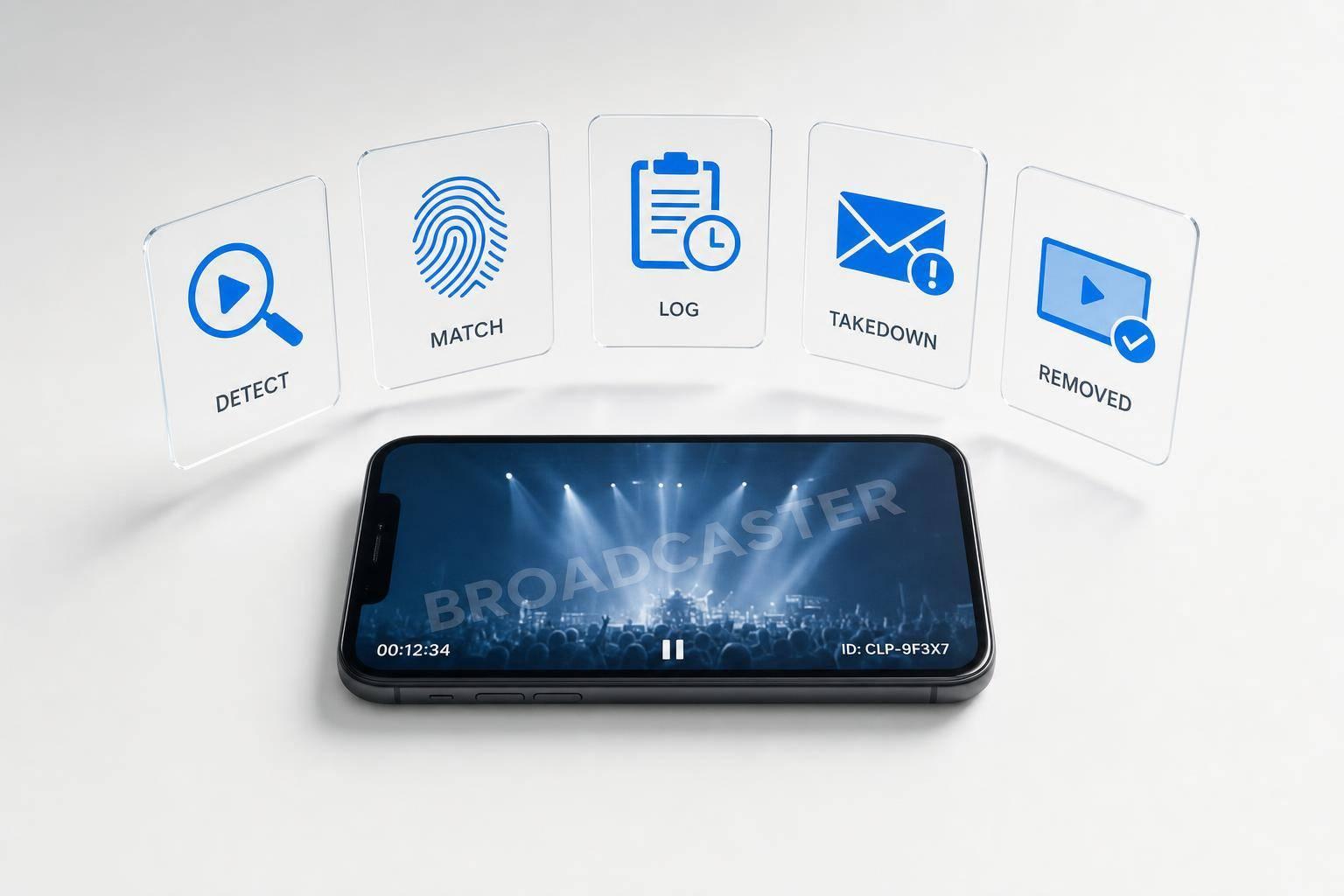
A five-step workflow to detect, log, and enforce removal of unauthorized video reposts using watermarks, fingerprints, and timestamps.